
Cash Drawers: A Complete Guide for Retail and POS Systems
Cash drawers remain an essential part of many retail, hospitality and point-of-sale (POS) environments. Although cashless payments continue to grow, many businesses still accept notes and coins and need a secure, organised way to manage physical cash.
A modern POS cash drawer does more than simply store money. When connected to a POS system, it can become an important part of the checkout process, helping staff manage transactions efficiently while keeping cash organised and secure.
Whether you operate a retail shop, restaurant, convenience store or other cash-handling business, choosing the right cash drawer can help improve checkout efficiency and cash management.
What Is a Cash Drawer?
A cash drawer is a secure compartment used by businesses to store cash, including banknotes and coins, during daily transactions.
Cash drawers are commonly connected to a POS terminal, receipt printer or cash register. In many modern POS setups, the drawer automatically opens when a cash transaction is completed.
A typical cash drawer includes:
- Note compartments
- Coin compartments
- Removable cash trays
- Lockable compartments
- Durable metal construction
- Connection to a POS or receipt printer
- Automatic opening mechanism on compatible models
Cash drawers are available in different sizes, configurations and connection types, allowing businesses to select a solution based on their POS setup and cash-handling requirements.
Why Are Cash Drawers Important?
For businesses that accept cash payments, having a dedicated cash drawer can make managing money at the checkout much easier.
Instead of keeping cash loose around a counter, employees can organise notes and coins into dedicated compartments. This can help staff provide change quickly and make it easier to count cash at the end of a shift.
A POS cash drawer can also be integrated into a wider point-of-sale system, allowing the drawer to open automatically when a cash transaction is processed.
Types of Cash Drawers
There are several types of cash drawers available for businesses.
Manual Cash Drawers
Manual cash drawers are opened by the cashier using a key, button or manual mechanism.
They can be suitable for simple retail environments where the cash drawer does not need to communicate directly with a POS system.
Automatic Cash Drawers
An automatic cash drawer is connected to a POS system or receipt printer and opens electronically when triggered.
This is a popular option for modern retail and hospitality environments because it can streamline the checkout process.
USB Cash Drawers
Some modern cash drawers can connect directly to compatible POS equipment using USB or other supported interfaces.
These can be useful for businesses using computer-based POS systems where a direct connection is required.
Printer-Driven Cash Drawers
Many traditional POS cash drawers connect to a compatible receipt printer.
When a cash transaction is completed, the POS system sends a command to the receipt printer, which then triggers the cash drawer to open.
This type of setup remains common in retail and hospitality environments.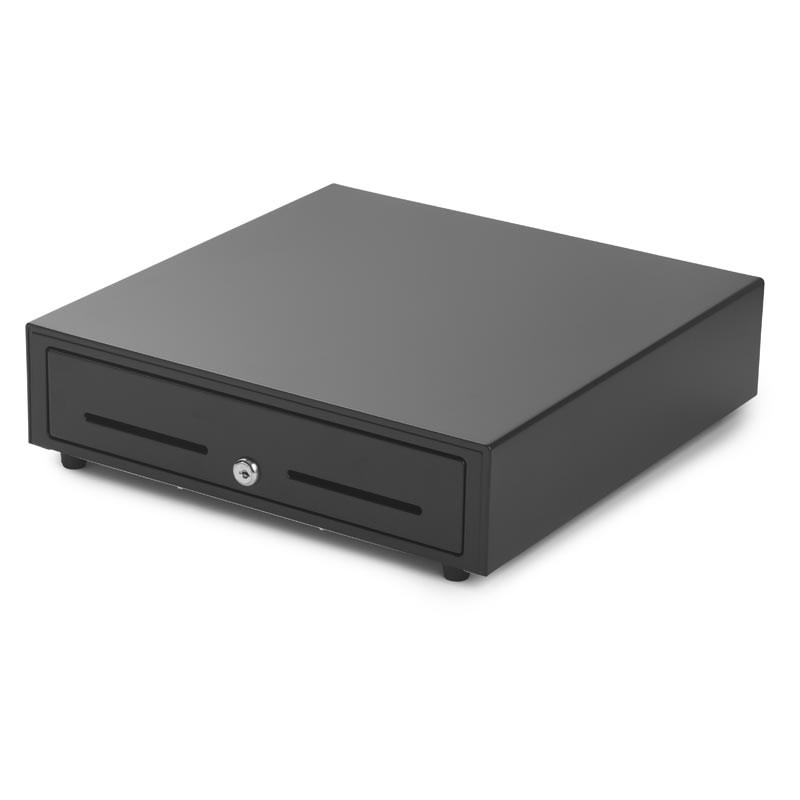
Cash Drawers for POS Systems
A POS cash drawer is typically integrated with other point-of-sale hardware such as:
- POS terminals
- Touchscreen monitors
- Receipt printers
- Barcode scanners
- Payment terminals
- POS software
- Customer displays
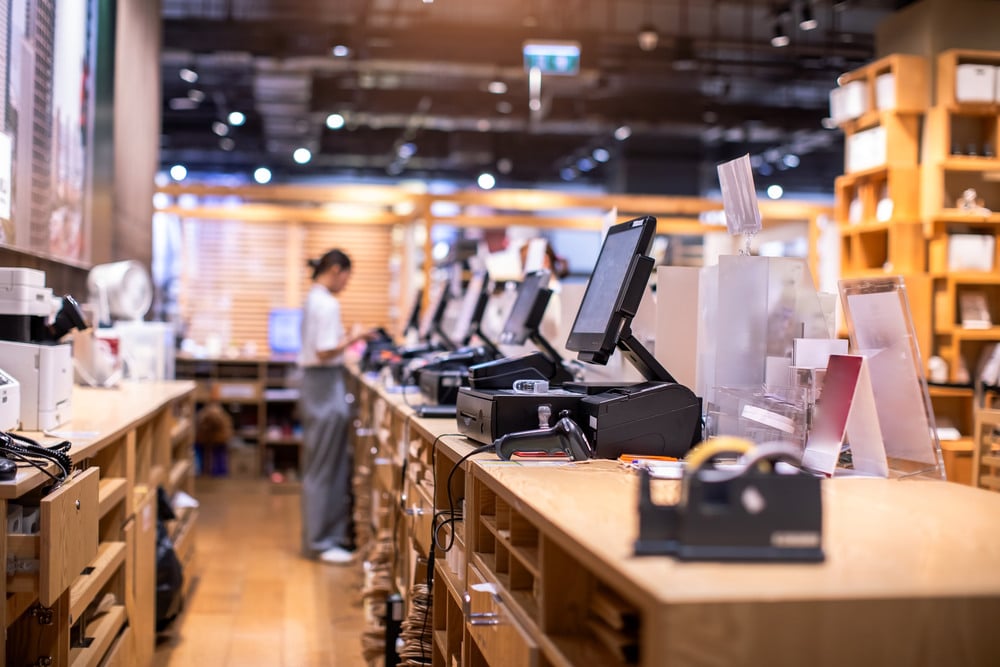
A typical retail checkout might have a touchscreen POS terminal connected to a barcode scanner and receipt printer, with the cash drawer positioned underneath the counter.
When a customer pays with cash, the transaction is recorded in the POS system. The cash drawer then opens so the cashier can receive the payment and provide change.
How Does a Cash Drawer Work?
A cash drawer works by securely storing cash while allowing authorised staff to access it during transactions.
In an automated POS environment, the process typically works as follows:
- The cashier scans the customer’s products.
- The POS system calculates the total.
- The customer chooses cash as the payment method.
- The POS system records the transaction.
- The cash drawer receives an electronic opening command.
- The cashier places the customer’s payment into the drawer.
- The cashier provides the required change.
- The drawer is closed and secured.
This straightforward process helps integrate cash handling into the overall POS workflow.
Choosing the Right Cash Drawer
When purchasing cash drawers, businesses should consider several important factors.
Size
Make sure the cash drawer fits comfortably into the available counter space.
Compact cash drawers can be useful for smaller retail counters, while larger models may provide more capacity for high-volume businesses.
Note and Coin Compartments
Consider how many denominations your business handles.
A well-designed cash drawer should provide enough compartments to keep notes and coins separated and organised.
Build Quality
Retail cash drawers are opened and closed repeatedly throughout the day. Look for a durable construction capable of handling regular use.
Metal cash drawers are commonly used in professional POS environments because of their durability.
Connectivity
Check how the cash drawer connects to your POS equipment.
Common options may include:
- RJ11/RJ12 interface
- USB
- Serial
- Printer-driven connection
Always check compatibility with your POS system and receipt printer before purchasing.
Lock and Security
Cash handling requires appropriate security. Many cash drawers include a key-operated lock with different positions for opening, locking and automatic operation.
Consider who should have access to the drawer and establish appropriate cash-handling procedures.
Cash Drawers for Retail
Retail businesses are among the most common users of cash drawers.
A retail cash drawer can be used alongside barcode scanners, receipt printers and POS software to create a complete checkout solution.
Applications include:
- Clothing stores
- Supermarkets
- Convenience stores
- Electronics retailers
- Hardware shops
- Pharmacies
- Gift shops
- Department stores
For busy retail environments, a durable and reliable POS cash drawer can help staff process transactions efficiently.
Cash Drawers for Restaurants and Hospitality
Cash drawers are also widely used in restaurants, cafés, bars and other hospitality businesses.
A restaurant POS system can connect the cash drawer to the ordering and payment workflow, allowing employees to process cash transactions while keeping the till organised.
Depending on the environment, businesses may choose compact cash drawers for smaller counters or larger models for high-volume operations.
Cash Drawer Security
Cash security should be an important consideration when choosing and using a cash drawer.
A cash drawer can provide a dedicated and lockable location for physical money, but businesses should also implement proper cash-handling procedures.
Best practices can include:
- Limit access to authorised employees.
- Keep the cash drawer closed when not in use.
- Count the starting float at the beginning of each shift.
- Reconcile cash against POS records.
- Perform regular cash counts.
- Avoid leaving excessive amounts of cash in the drawer.
- Keep drawer keys secure.
- Investigate discrepancies promptly.
Technology and good operational procedures work together to improve cash management.
Cash Drawers and Cashless Payments
The growth of card payments and mobile payment technologies has changed the way businesses handle transactions. However, cash remains an important payment method for many customers and businesses.
For this reason, many modern POS systems are designed to support both cash and electronic payments.
A business may use a payment terminal for card transactions while retaining a cash drawer for customers who prefer to pay with notes and coins.
This creates a flexible checkout environment that supports multiple payment methods.
Cash Drawer vs Cash Register
Although the terms are sometimes used interchangeably, a cash drawer and a cash register are not exactly the same.
A traditional cash register generally combines the cash storage compartment with transaction processing and other functions.
A modern POS cash drawer, on the other hand, is usually one component of a modular POS system.
A typical modern POS setup may consist of:
POS terminal + POS software + barcode scanner + receipt printer + cash drawer + payment terminal
This modular approach allows businesses to choose the hardware that best fits their operational requirements.
Benefits of a Modern POS Cash Drawer
A quality POS cash drawer can provide several benefits:
Better Organisation
Separate compartments keep notes and coins organised and make it easier for cashiers to provide change.
Improved Checkout Efficiency
Automatic opening can reduce unnecessary steps during cash transactions.
Enhanced Security
Lockable drawers provide a dedicated location for physical cash.
POS Integration
Compatible drawers can communicate with POS systems and receipt printers.
Professional Checkout Setup
A dedicated cash drawer creates a cleaner and more professional point-of-sale environment.
What to Look for in a Cash Drawer
Before purchasing a cash drawer, consider the following:
- Compatibility: Will it work with your POS system?
- Connection: Does it use RJ11/RJ12, USB, serial or another interface?
- Dimensions: Will it fit your counter?
- Capacity: Does it have enough note and coin compartments?
- Construction: Is it designed for your expected usage?
- Security: Does it include a suitable locking mechanism?
- Opening method: Manual or automatic?
- Currency: Does the insert suit your currency denominations?
- Warranty: What level of manufacturer support is available?
Taking these factors into consideration can help businesses choose a cash drawer that works effectively with their existing POS hardware.
Are Cash Drawers Still Relevant?
Despite the increasing popularity of card payments, cash drawers remain relevant for businesses that accept physical currency.
Modern POS systems can support multiple payment methods, allowing businesses to combine cash handling with card readers, contactless payments and mobile payment solutions.
For retailers and hospitality businesses that still accept cash, a reliable cash drawer remains a simple and practical component of the checkout environment.
Conclusion
Cash drawers are a fundamental component of many retail and hospitality POS systems. From organising notes and coins to integrating with receipt printers and POS software, they help businesses manage cash transactions efficiently.
When choosing a POS cash drawer, businesses should consider size, capacity, connectivity, durability, security and compatibility with existing POS hardware.
Whether you’re setting up a new retail checkout, upgrading an existing POS system or replacing an old cash register drawer, selecting the right cash drawer can help create a more efficient and professional payment environment.



Leave a Reply