
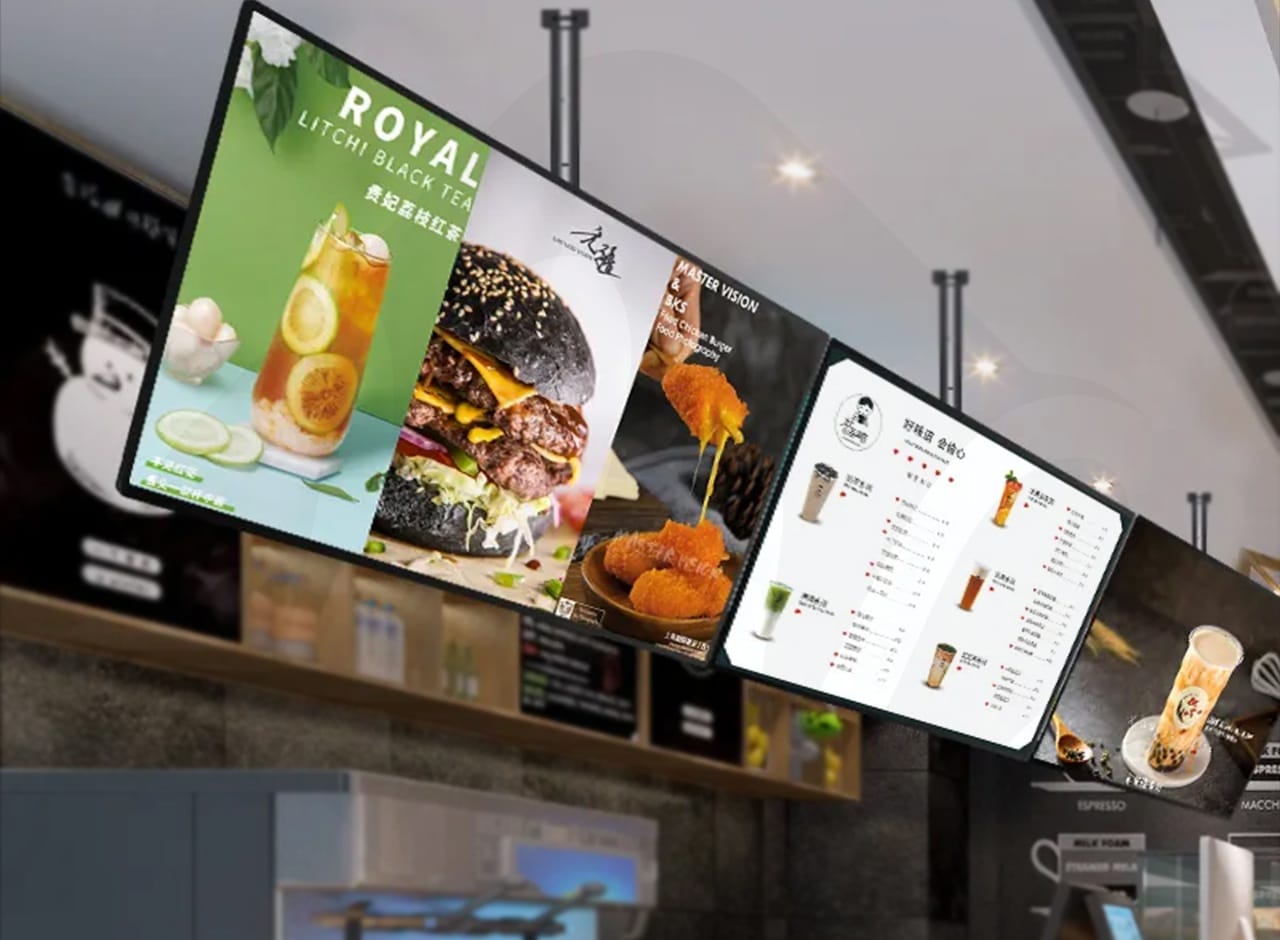
Electronic Menu Board: The Complete Guide for Restaurants and Hospitality Businesses
An electronic menu board is a digital display used by restaurants, cafés, fast-food outlets, takeaways and other hospitality businesses to showcase menus, prices, promotions and product information.
Unlike traditional printed menus, an electronic menu board allows businesses to update content digitally without having to print and replace physical signs. This makes digital menu boards a flexible and effective solution for businesses that regularly change their menus, prices or promotions.
With the growing use of digital signage in restaurants, electronic menu boards are becoming an increasingly popular way to improve the customer experience while making menu management easier.
What Is an Electronic Menu Board?
An electronic menu board is essentially a digital menu display that uses a screen to present food and beverage options to customers.
The display can show:
- Food and drink menus
- Prices
- Product images
- Special offers
- Promotions
- Meal deals
- Nutritional information
- Allergen information
- Videos and animations
- QR codes
- Branding and advertisements
The content is usually managed through digital signage software, allowing staff to update menus remotely or from a central management system.
Electronic menu boards can be installed behind a counter, above a serving area, in a drive-through, or throughout a restaurant or café.
How Does an Electronic Menu Board Work?
A typical electronic menu board consists of three main components:
1. Digital Display
The screen displays the menu content to customers. Depending on the application, businesses can use commercial displays, professional monitors, TVs or specialised digital signage screens.
Screen size and orientation can vary depending on where the display will be installed.
2. Media Player
A media player connects the screen to the digital signage platform and delivers the content to the display.
Some modern commercial displays have built-in media players, eliminating the need for a separate device.
3. Digital Signage Software
Digital signage software allows businesses to create, manage and schedule menu content.
Users can upload images, videos, text and promotional content and then assign it to individual screens or groups of displays.
Cloud-based platforms can also allow businesses to manage multiple locations from a central dashboard.
Benefits of Using an Electronic Menu Board
There are several reasons why restaurants and hospitality businesses are switching from traditional printed menus to digital displays.
Easy Menu Updates
One of the biggest advantages of an electronic menu board is the ability to change content quickly.
If a product becomes unavailable, prices change or a new promotion launches, staff can update the digital menu without printing new signs.
This can be particularly useful for restaurants with frequently changing menus.
Promote Special Offers
Digital displays provide an excellent opportunity to promote high-margin products, seasonal offers and meal deals.
Businesses can use animations, images and videos to draw attention to specific products.
For example, a restaurant could display a breakfast promotion in the morning and automatically switch to a lunch menu later in the day.
Improve Customer Experience
Clear, attractive digital menus can make it easier for customers to browse products and understand available options.
High-resolution product images can also make meals more visually appealing and help customers make purchasing decisions.
Reduce Printing Costs
Traditional menus and printed promotional signs need to be designed, printed and replaced whenever information changes.
With digital menu boards, businesses can make updates electronically, reducing the need for repeated printing.
Schedule Content Automatically
Many digital signage platforms allow businesses to schedule content according to the time or day.
A restaurant could automatically display:
Breakfast menu → Lunch menu → Dinner menu
without staff having to manually change the screens.
Consistent Branding
An electronic menu board makes it easier for businesses to maintain consistent branding across multiple locations.
Fonts, colours, logos, images and layouts can be standardised so that every restaurant location displays the same brand identity.
 Electronic Menu Boards for Restaurants

Restaurants are one of the most common applications for digital menu boards.
A restaurant can use multiple displays to create a dynamic digital menu system.
For example:
- Screen 1 – Main menu
- Screen 2 – Drinks
- Screen 3 – Meal deals
- Screen 4 – Desserts
- Screen 5 – Promotional content
This approach gives businesses more space to present information while keeping individual screens uncluttered.
Digital Menu Boards for Cafés
Cafés can use electronic menu boards to showcase coffee, tea, pastries, sandwiches and seasonal products.
Digital displays are particularly useful for highlighting limited-time products.
A café could promote a seasonal drink with a large product image and automatically remove the promotion when the campaign ends.
Electronic Menu Boards for Fast-Food Restaurants
Fast-food restaurants often have large menus containing numerous products, combinations and meal deals.
A digital menu board can make it easier to organise these options and update them when products or prices change.
Animated content can also be used to highlight popular meals and limited-time promotions.
Digital Menu Boards for Takeaways
Takeaway businesses can use digital menu displays behind the counter to showcase products and prices.
Because takeaway menus can change frequently, the ability to update information quickly can be particularly valuable.
Digital displays can also be used to promote add-ons and encourage customers to increase their order value.
Drive-Through Digital Menu Boards
Electronic menu boards are also used in drive-through environments.
Outdoor digital displays can show menu items, prices, promotional offers and product images.
Businesses can use scheduled content to promote breakfast menus during the morning and switch to lunch or dinner menus later in the day.
Outdoor applications require displays specifically designed to operate in the relevant environmental conditions, including considerations such as brightness, weather protection and temperature.
Electronic Menu Board vs Traditional Menu
| Feature | Electronic Menu Board | Traditional Printed Menu |
|---|---|---|
| Easy to update | Yes | No |
| Change prices quickly | Yes | Requires reprinting |
| Display video | Yes | No |
| Display animations | Yes | No |
| Schedule content | Yes | No |
| Product images | Yes | Yes |
| Multiple locations | Central management possible | Manual updates |
| Reprinting required | No | Yes |
| Promotional flexibility | High | Limited |
The main advantage of an electronic menu board is flexibility. Businesses can change and schedule content without physically replacing the menu.
What Equipment Do You Need?
Setting up a digital menu board usually requires several components.
Commercial Display
Choose a screen based on viewing distance, installation location, screen size, brightness and operating hours.
For high-traffic commercial environments, a professional commercial display may be preferable to a standard consumer television.
Digital Signage Player
The media player delivers content from the signage platform to the display.
Depending on the display and signage solution, the media player may be integrated into the screen.
Digital Signage Software
The software provides the tools needed to create playlists, manage screens and schedule content.
Businesses with multiple locations should consider a platform that supports centralised content management.
Internet Connection
Cloud-based digital signage systems generally require an internet connection for content updates and remote management.
Some systems can also store content locally so that screens continue displaying content if the internet connection temporarily becomes unavailable.
How to Design an Effective Digital Menu Board
Simply putting a traditional menu onto a digital screen isn’t always enough. Good digital menu board design should make information easy to read and products easy to understand.
Keep the Layout Simple
Avoid filling the screen with too much information.
Use clear headings, readable fonts and sufficient spacing between menu items.
Use High-Quality Images
Professional food photography can make products more appealing.
However, images should support the menu rather than make the screen unnecessarily cluttered.
Highlight Best Sellers
Use the digital display to draw attention to popular or profitable products.
Labels such as “Best Seller”, “New” or “Limited Time” can help customers identify featured products.
Use Appropriate Font Sizes
Customers should be able to read the menu comfortably from the expected viewing distance.
Make important information such as product names and prices particularly clear.
Use Your Brand Identity
Colours, fonts, logos and imagery should match your overall brand identity.
A consistent design creates a more professional customer experience.
Electronic Menu Boards and Digital Signage Software
The software behind an electronic menu board is just as important as the screen itself.
A good digital signage software platform should make it easy to:
- Create menu layouts
- Upload images and videos
- Schedule content
- Manage multiple screens
- Group displays
- Update menus remotely
- Monitor connected displays
- Schedule different content by time or location
For businesses operating several restaurants, centralised management can significantly simplify content updates.
How Much Does an Electronic Menu Board Cost?
The cost of an electronic menu board depends on several factors, including:
- Screen size
- Display type
- Number of screens
- Media player requirements
- Digital signage software
- Installation
- Mounting equipment
- Networking
- Content creation
A small café may only require one display, while a large restaurant may need several screens positioned behind the counter.
Businesses should consider both the initial equipment cost and ongoing software, maintenance and installation costs when planning a digital menu board system.
Are Electronic Menu Boards Worth It?
For many restaurants, cafés and hospitality businesses, an electronic menu board can provide significant benefits.
The ability to update menus instantly, schedule promotions and maintain consistent branding makes digital displays considerably more flexible than traditional printed menus.
Businesses that regularly change prices, introduce seasonal products or operate multiple locations may find digital menu boards particularly valuable.
Choosing the Right Electronic Menu Board
Before purchasing an electronic menu board system, consider the following:
Screen size: Choose a display that is appropriate for the viewing distance.
Brightness: Indoor and outdoor environments have different brightness requirements.
Operating hours: If the display will operate for long periods every day, consider a commercial-grade display designed for extended operation.
Connectivity: Check whether the system supports the required wired or wireless network connection.
Software: Choose digital signage software that makes menu updates and scheduling easy.
Scalability: If you plan to open additional locations, choose a system that can manage multiple screens centrally.
Content: Consider how you will create and update menu graphics, images, videos and promotions.
The Future of Digital Menu Boards
As restaurants and retailers continue adopting digital technology, electronic menu boards are becoming more sophisticated.
Modern systems can integrate with POS platforms, inventory systems and other business technologies to create more dynamic customer experiences.
For example, menus can potentially be updated based on product availability, time of day or promotional campaigns.
Combined with digital signage software, commercial displays and POS technology, electronic menu boards can become an important part of a modern restaurant’s technology ecosystem.
Conclusion
An electronic menu board provides restaurants, cafés, takeaways and other hospitality businesses with a flexible way to display menus, promotions and product information.
Compared with traditional printed menus, digital menu boards make it easier to update prices, promote products, schedule content and maintain consistent branding across multiple locations.
Whether you operate a small café or a multi-location restaurant chain, investing in the right digital menu board system can help create a more engaging customer experience while making menu management faster and more efficient.
When selecting a solution, look beyond the display itself. Consider the complete system, including the screen, media player, digital signage software, connectivity, installation and content management.
With the right setup, an electronic menu board can become more than just a digital menu—it can be a powerful marketing and communication tool for your business.



Leave a Reply